


Definition of Pediatric Brain Death

Determination of Brain Death
- Identify the cause of irreversible brain injury
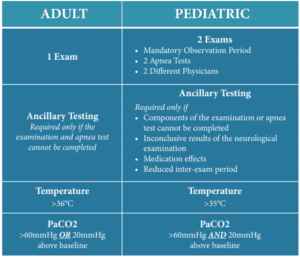
- Exclude conditions that can interfere with performing or interpreting the brain death examination
- Two examinations with observation period
- Neonates (>37 weeks gestational age to 30 days): 24 hours
- Infants and Children (>30 days to 18 years): 12 hours
- Apnea test accompanying each exam
- Ancillary tests (if needed)

Clinical Challenges
The evaluation of patients for brain death can be complicated by specific clinical challenges. These conditions include, but are not limited to, the presence of spinal reflexes, neuromuscular blockade, therapeutic hypothermia, neonatal cerebral physiology, extracorporeal membrane oxygenation (ECMO), and variability of drug metabolism.
Ethical Challenges
Ethical questions are raised when considering brain death and how that affects the diverse population we serve. It’s important to remember that brain death is not universally accepted. There are religions and cultures that do not accept brain death as a final diagnosis and, in a couple of states, there are statutes to accommodate those beliefs.
Communicating with Families
For the vast majority of families, it’s best to begin communicating early and often after acute brain injury in an effort to be transparent and avoid confusion. When delivering the devastating diagnosis of brain death, it is important to pay close attention to the language used. Be clear and avoid conflicting language such as “he/she will die after discontinuation of the ventilator,” or the use of the terminology, “life support,” when in actuality life is not being supported anymore. Try explaining the clinical definitions of death and emphasizing that brain death equals death. Lastly, do not present the discontinuation of the ventilator as an option, instead, it should be presented as the appropriate next step.


