
The Alliance

Spotlight Series

The Alliance Spotlight Series is a recurring one-page publication for front-line healthcare professionals, offering quick-takes on critical topics affecting the field of organ donation and transplantation. We encourage you to download these issues and share them with your front-line colleagues and partners.

Spotlight Series Past Issues

Exclusive Access

Take advantage of our professional partnership levels of support to receive exclusive early access to The Alliance Insight Series publications.

You’ll still have access to all our materials when they go online one month after publication.

Are You Kidney Me
Currently, in the U.S., mainly kidneys recovered from Extended Criteria Donors (ECD) and Donation after Circulatory Death (DCD) donors are being pumped.

Kidney Pumping – What Does the Data Show?

What is kidney pumping?
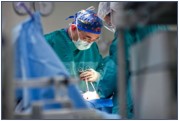
Surgery

When kidneys are recovered from a deceased donor there is a variable delay prior to transplantation. In order to minimize ischemic damage to the tissue cells, historically, kidneys would be preserved with static cold storage (CS), e.g. in a cool box. An alternative to CS is to utilize machine perfusion (MP), commonly known as kidney pumping.

How does kidney pumping work?

Surgery2MP entails placing kidneys on a pump to provide circulation of preservation solution, usually at hypothermic temperatures. The perfusion of the kidney promotes equilibration of the interstitium, removal of toxic metabolites, and delivers oxygen and nutrients, allowing for better graft preservation, pre-transplant assessment, and optimization.

Are all kidneys pumped?

Currently, in the U.S., mainly kidneys recovered from Extended Criteria Donors (ECD) and Donation after Circulatory Death (DCD) donors are being pumped.

What does the data show and how might this impact practice?

A randomized controlled trial in Europe demonstrated significant reduction in delayed graft function (DGF) with the use of MP (Moers et al, 2009). In this trial, Standard Criteria Donors (SCD), ECD, and DCD donors were included (n=336) and it was identified that DGF decreased from 26.5% to 20.8%.

The U.S. retrospective review study conducted by Dr. Franklin and Dr. Cannon hypothesized that machine perfusion in the U.S. will also decrease episodes of DGF (2013). This study reviewed all adult isolated kidney transplants from 1/1/2005 to 3/31/2011 (n=52,052), including all SCD, ECD, and DCD donors, comparing MP (38%) to CS (62%) kidney outcomes. Findings demonstrated, after propensity matching, that DGF occurred in 21% of MP kidneys vs 29% of CS kidneys (p < 0.001), which translates into every 12.5 MP kidneys one episode of DGF will be prevented.

Article 1103833 02ECF5FF000005DC 368 468x341Even for SCD donors, DGF rates were 16.8% for MP kidneys vs 25.3% for CS kidneys. This demonstrated an 8.5% absolute reduction in DGF (2015).

While further work is still needed to determine the ideal population and cost neutrality for MP benefit, the clinical conclusion recommends the expansion of MP beyond its current level of utilization would likely be beneficial in reducing DGF.

Helpful Resources

  • Moers C, Smits JM, Maathuis MH, et al. Machine perfusion or cold storage in deceased-donor kidney transplantation. N Engl J Med, 2009; 360(1):7-19. doi:10.1056/NEJMoa0802289.
  • Cannon RM, Brock GN, Garrison RN, et al. To pump or not to pump: a comparison of machine perfusion vs cold storage for deceased donor kidney transplantation. J Am Coll Surg, 2013; 216(4):625-634. doi: 10.1016/j.jamcollsurg.2012.12.025.
  • Cannon RM, Brock GN, Garrison RN, et al. Machine perfusion: not just for marginal kidney donors. Am Surg, 2015; 81(6):550-556.
  • Nath J, Effects of machine perfusion on cadaveric kidneys for transplantation.

Questions & Comments

Please send all questions and/or feedback to info@organdonationalliance.org.

Taken from a webinar presentation by Glen A. Franklin, MD, (Professor & Vice Chairman for Education, Hiram C Polk Jr MD, Department of Surgery, University of Louisville, Louisville, KY, Medical Director, KY Organ Donor Affiliates).  Special thanks to Dr. Franklin for his contributions to this inservice.

Worth Sharing
EC KidneyPumping Nov2016

A Special Thanks to This Series’ Contributors

Facebook 1695250771572 7110397092211096014
About the Editor |
Hedi Aguiar

Hedi was a critical care nurse for over 25 years, gathering experience in three different countries. After working as an ICU Educator, she transitioned into the organ, eye, and tissue donation field. She worked for two different Organ Procurement Organizations (OPOs), initially as a coordinator and then in management. She then became the Senior Director of Programs for the Organ Donation and Transplantation Alliance, leading various national initiatives, councils and workgroups.

In 2018, she founded Fundamental Roots, offering speaking, consulting, and customized training on communication, human connection, trust building, cross-cultural fluency, and physician partnership for organizations nationwide.

(Fun Fact – she has lived in 7 different countries, this explains her ever changing accent!)

Advancing All.

The Alliance is not a membership organization and therefore relies on annual voluntary financial support from OPOs and transplant programs who find value in our programs and initiatives.

We invite you to join us as a professional partner